I have a habit that drives my friends up the wall: I keep pausing movies. Not for bathroom breaks — just to stare at a shot. A doorway framed a certain way, light falling across someone's face, a desert that seems to go on forever. If a film can make me do that, the plot almost doesn't matter anymore. The pictures have already done their job. So this list is personal. These are the films I reach for when I want to remember what a camera can actually do.
The People Behind the Camera
Let's start with Roger Deakins, because everybody does, and for good reason. The man got nominated for Oscars for years and years before he finally won for Blade Runner 2049 (2017) and 1917 (2019), and honestly, either one would've been enough to secure his legacy. That orange Las Vegas sequence in Blade Runner 2049 — Deckard wandering through a radioactive-looking wasteland — looks like someone painted the end of the world and then let Ryan Gosling walk around inside it.
Then there's Emmanuel Lubezki, who shoots like the camera has forgotten what gravity is. In The Revenant (2015) he used almost nothing but natural light, in real Canadian and Argentinian winters, and you can feel the cold coming off the screen. Your fingers genuinely hurt a little watching DiCaprio crawl through that snow. And spare a thought for Darius Khondji, who shot Se7en (1995) and made a whole city look damp, green and rotten — in that film, the weather is basically another murderer.
Colour Doing the Heavy Lifting
Most films use colour because, well, that's what colour film does. The great ones use it on purpose. Wong Kar-wai's In the Mood for Love (2000) is my favourite example. Christopher Doyle and Mark Lee Ping-bing cramp the two lovers into narrow hallways, doorways and tiny noodle-stall corners, all reds and deep greens, and the two of them still barely touch. The whole film is about wanting somebody you're not allowed to want, and the camera tells you that before a single line of dialogue does.
Zhang Yimou went even further in Hero (2002), building whole chunks of the story around single colours — a red version, a blue version, a white one. A sword fight across a lake so still it looks like glass. Leaves falling in a golden forest. I've seen it maybe six times and I still can't tell you the plot in order, but I can describe those shots like I took the photos myself. Then, at the opposite end of the scale, there's Wes Anderson and Robert Yeoman on The Grand Budapest Hotel (2014): pink, purple, everything dead centre in the frame, like a cake in a shop window — except the story underneath all that sugar is quietly sad.
Tiny People, Enormous Places
Sometimes all a film needs is a massive landscape and one small human in it. Lawrence of Arabia (1962) is still the champ here. Freddie Young shot it in 70mm, and there's a scene where a rider comes out of a desert mirage — just a wobbling speck for what feels like forever — that modern blockbusters with unlimited budgets still can't top. Size, patience, heat. That's it. That's the shot.
Mad Max: Fury Road (2015) does size at 200 kilometres an hour. George Miller dragged cinematographer John Seale out of retirement, shipped him to the Namibian desert and kept the action framed in the centre so your eyes never get lost in the chaos. And then there's The Lighthouse (2019), which goes the other way entirely: grainy black and white, a nearly square frame, Robert Pattinson and Willem Dafoe trapped in what looks like a cursed old photograph. Beautiful, but you wouldn't want to live in it.
Five More for Your Watchlist
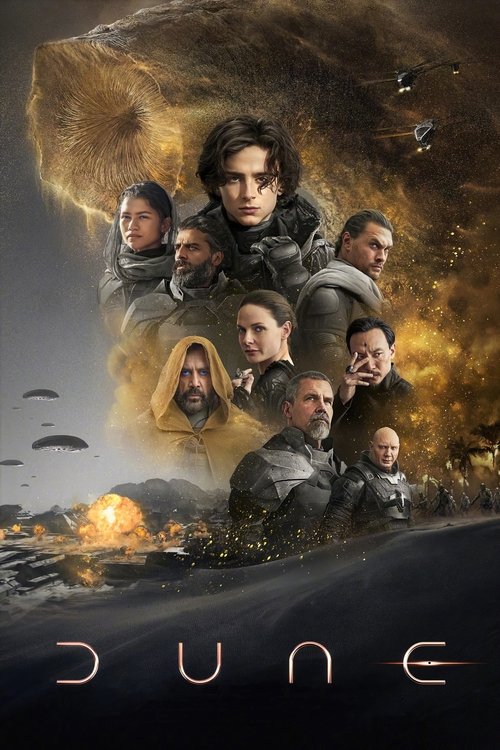
- Dune (2021) — Greig Fraser makes sand look both holy and terrifying, and the buildings look like they've been standing for ten thousand years.
- La La Land (2016) — old-school musical colours, shot by Linus Sandgren, with camera moves that would've made the 1950s jealous.
- Parasite (2019) — the rich family's house and that cramped semi-basement do half the storytelling before anyone speaks.
- Spider-Man: Into the Spider-Verse (2018) — animation that looks like a comic book actually printing itself in front of you. Nothing else looks like this film.
- The Tree of Life (2011) — Malick and Lubezki drifting through childhood memories in late-afternoon light. Half the audience walks out; the other half never forgets it.
Try This Sometime
Here's my favourite test, and feel free to steal it: pick a scene from any film on this list, turn the sound off and just watch. No dialogue, no score, nothing helping it along. If it still gets to you — the flooded streets in Parasite, that silent desert in Lawrence of Arabia — then you're watching someone paint with light, and the story is almost beside the point. Phone in another room, lights down, two hours. Trust me, it's the best seat in the house.