There's a moment in every great true-story film where you remember: this actually happened. A real person stood where this actor is standing and made this choice, and it cost them something real. Fiction can invent bigger explosions, but it can't invent that. So here are the films, drawn from real events, that we keep coming back to — stories of rescue, fraud, genius, survival, and people doing the right thing when it would've been much easier not to.
Survival, Conscience, and Doing the Right Thing
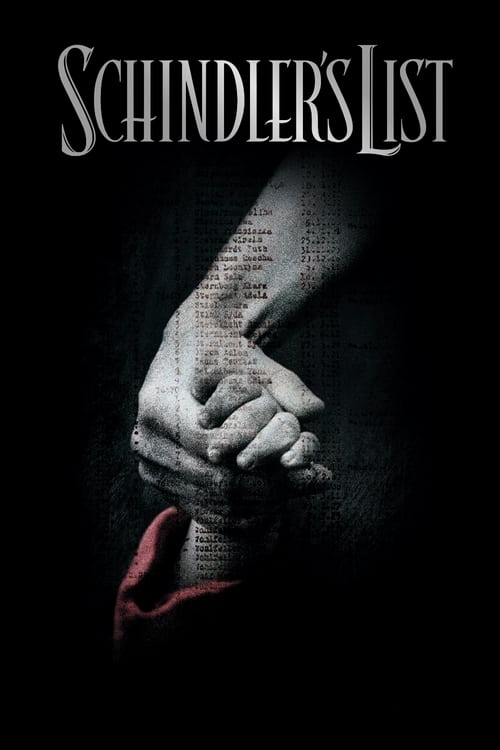
Start with the one that towers over the whole genre. Schindler's List (1993) tells the story of Oskar Schindler, a German businessman and Nazi party member — not a saint, not even close — who spent his fortune bribing officials to protect his Jewish workers, and ended up saving more than a thousand lives. Spielberg shot it in black and white, mostly handheld, like recovered footage. Liam Neeson, Ben Kingsley, and Ralph Fiennes (genuinely terrifying here) all give the performances of their careers. It's three hours long and I've never once checked my watch.
12 Years a Slave (2013) is harder to sit through, and it's meant to be. Steve McQueen adapts Solomon Northup's 1853 memoir: a free Black musician from New York, kidnapped and sold into slavery in Louisiana. Chiwetel Ejiofor barely raises his voice in the whole film, which somehow makes it worse — this is a man swallowing everything to survive. It doesn't soften a single frame. It shouldn't.
For heroism of a cooler-headed kind, there's Apollo 13 (1995). Everyone knows the ending — the astronauts come home — and Ron Howard still makes you sweat through it. Tom Hanks, Kevin Bacon, and Bill Paxton solve lethal problems with slide rules and duct tape while the engineers on the ground do the same. "Failure is not an option" became a cliché because the film earns it line by line.
Genius, Ambition, and Total Reinvention
The Social Network (2010) shouldn't work. It's mostly young men talking in dorm rooms and deposition hearings. But Fincher directs it like a thriller and Aaron Sorkin's script turns the founding of Facebook into a story about friendship curdling into litigation. Jesse Eisenberg plays Zuckerberg as brilliant, petty, and weirdly sympathetic all at once — you can't quite condemn him, and that's why the film still feels alive long after the headlines it dramatised have faded.
Catch Me If You Can (2002) is Spielberg in his most playful mode. Leonardo DiCaprio plays Frank Abagnale Jr., who before turning nineteen had posed as an airline pilot, a doctor, and a lawyer while cashing millions in forged cheques. Tom Hanks is the FBI man chasing him — and slowly, almost without either of them noticing, he becomes the closest thing this lonely kid has to a father. It's a caper, sure. It's also quietly sad.
And A Beautiful Mind (2001) follows mathematician John Nash, played by Russell Crowe, from Princeton brilliance through schizophrenia and out the other side to a Nobel Prize. Howard's cleverest move is structural: for a long stretch, you experience Nash's delusions as he does, so his slow climb back feels earned rather than sentimental.
Truth-Tellers, Underdogs, and One Rescued Story
- Spotlight (2015) — the Boston Globe team that exposed systemic abuse and its cover-up. No car chases. Just documents, door-knocking, and people deciding to print what powerful people begged them not to.
- The Imitation Game (2014) — Benedict Cumberbatch as Alan Turing, who helped crack Enigma and shorten the war, then was prosecuted by the country he'd saved. It still makes me angry.
- Moneyball (2011) — Brad Pitt as Billy Beane, rebuilding a broke baseball team on statistics everyone else laughed at. You don't need to like baseball. I don't, particularly.
- The Pursuit of Happyness (2006) — Will Smith, homeless with his young son, fighting through an unpaid internship. The bathroom scene. You know the one.
- Rush (2013) — Ron Howard again, on the 1976 rivalry between James Hunt and Niki Lauda: playboy versus perfectionist, and neither of them is simply the hero.
Hidden Figures (2016) gets its own paragraph because it literally rescued its story from obscurity. Katherine Johnson, Dorothy Vaughan, and Mary Jackson — played by Taraji P. Henson, Octavia Spencer, and Janelle Monáe — were the Black mathematicians whose calculations put America's first astronauts into orbit, in a segregated NASA that kept their names off the reports. The film is rousing without airbrushing the obstacles, and it put Johnson's real story into classrooms worldwide before she died at 101. That's what "based on a true story" can do at its best: not just entertain, but restore.
A Quick Note on "Based On"
One honest caveat before you dive in: every film here compresses timelines, merges real people into composite characters, or invents dialogue wholesale. That's drama, not documentary, and it's fine — as long as the film stays true to what the story meant. Judge them that way. And if one of these sends you off afterwards to read what really happened (Schindler and Turing especially reward it), then it's done its job twice.